
The YOUNTVILLE MOON
Articles & Essays
VOLUME 1, 2026Our goal is to provide the information residents need to think for themselves, understand the tradeoffs, and ask better questions of the people they elected to govern this town.
THE COMMONS EXPLAINED, #5, Shared Ground
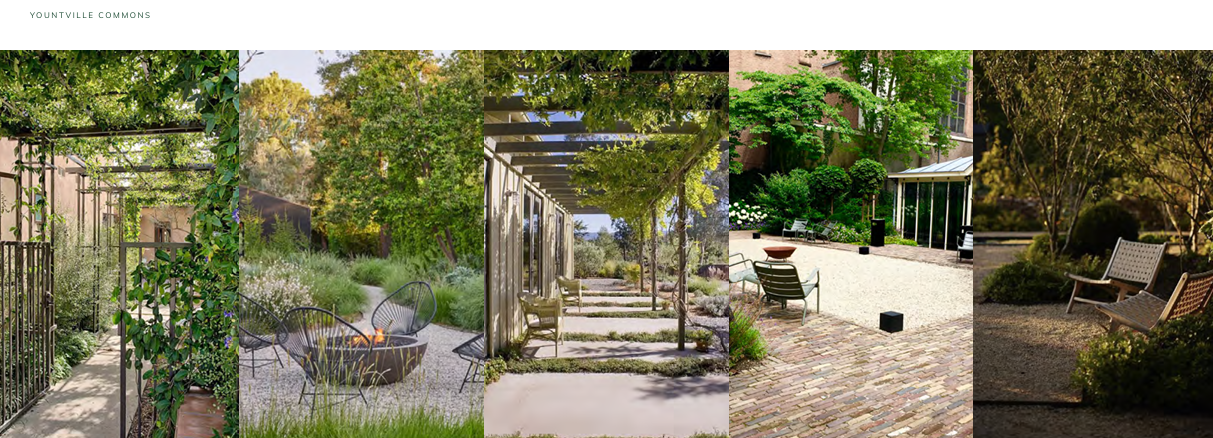
Recovering that distinction does not require anyone to change positions. A resident can still object to the number of homes, three stories, financing, ownership or pace. Those are legitimate subjects for argument. The more useful first step is to stand over the Town's site model and see the proposal whole: the limited building footprints, the continuous public landscape, and the sequence in which complete portions could be built. The model was made so the plan could be seen rather than imagined.
Congratulations. You Delayed It, #3 But Sure, Let's Do Another Study
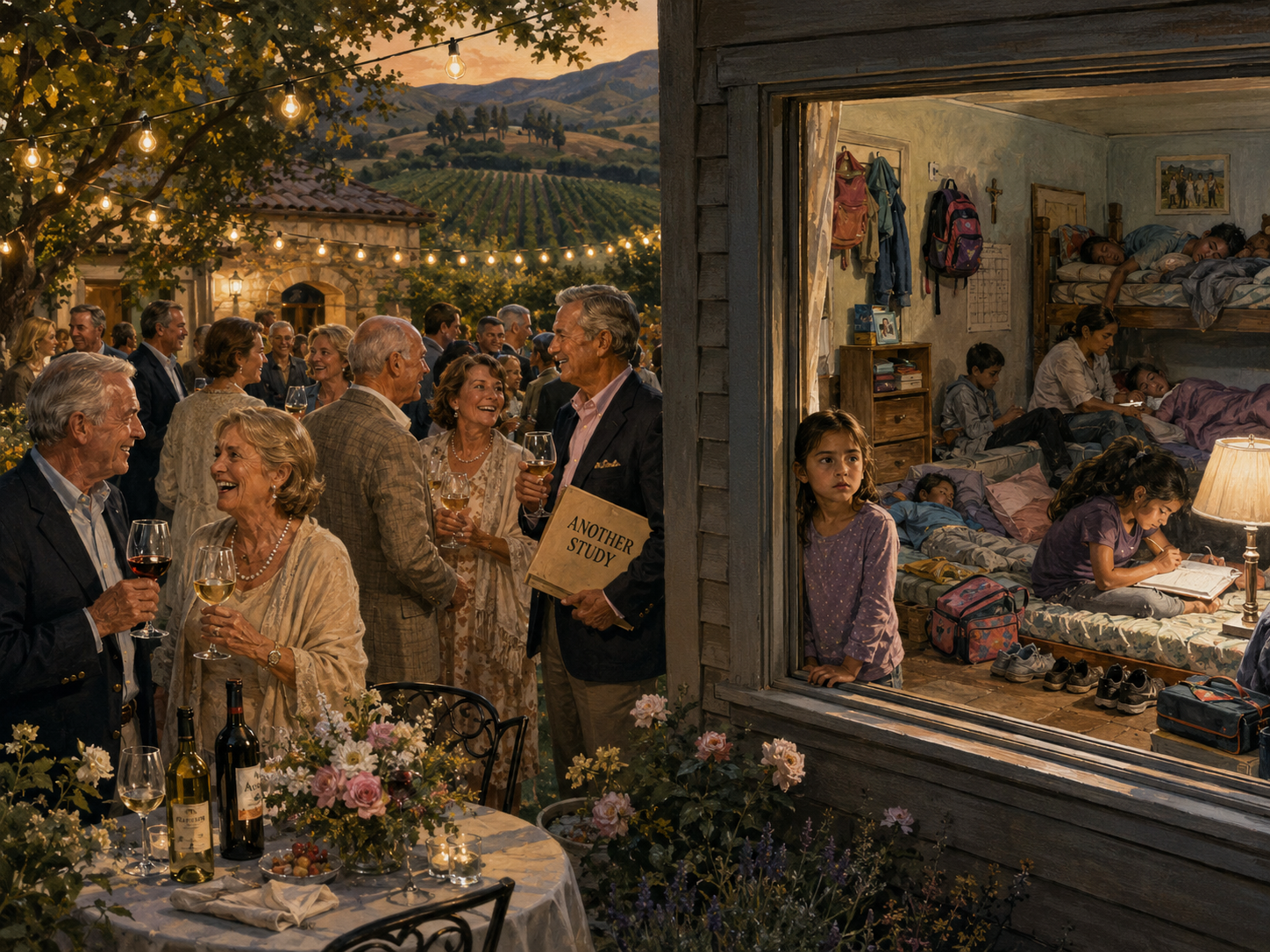
At some point, 'another study' stops being a request for information and becomes one more request request for delay. That is the oldest trick in the book. Nobody has to say no. Nobody has to identify land, money, buildings or a construction date. You simply say the issue deserves more study. It is the public-policy version of 'let's grab lunch sometime.' Everyone can agree to it, nobody has to commit to anything, and a year later everyone can be exactly where they started. A study names no land, commits no money, builds no housing and houses no child.
Congratulations. You Delayed It, #2 The People Behind the Beds
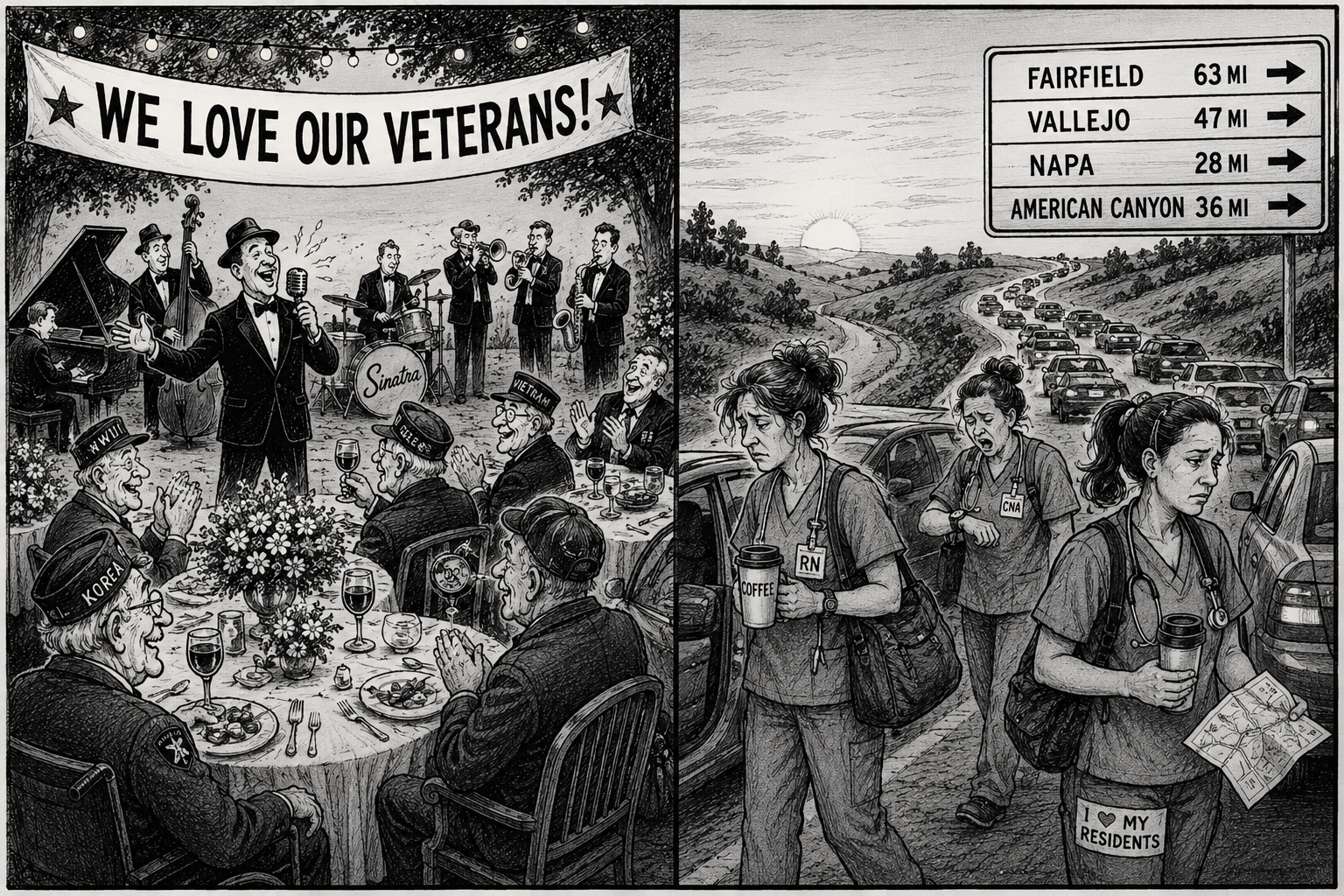
The contradiction is not that Yountville honors veterans while secretly not caring about them. It is more ordinary and therefore more uncomfortable. It is possible to care deeply about an outcome while resisting some of the difficult choices required to produce it. A complimentary meal and music on a summer evening are generous things to give a veteran. Housing the people who care for that veteran requires land, money, density, compromise and the willingness to accept change somewhere. The first is pleasurable. The second is citizenship.
Yountville is Not for Sale #8, The Page Gary Is Asking You to Turn
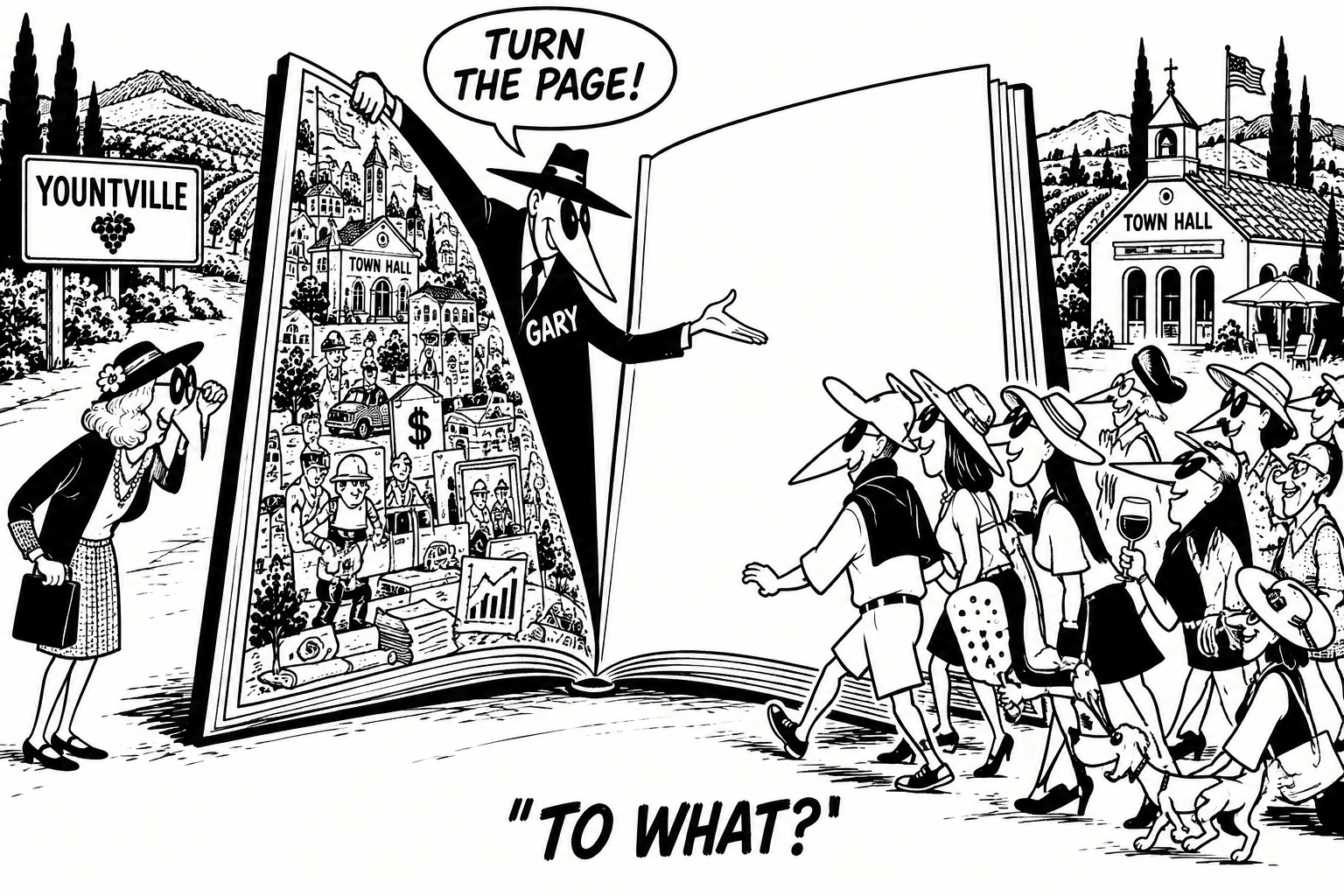
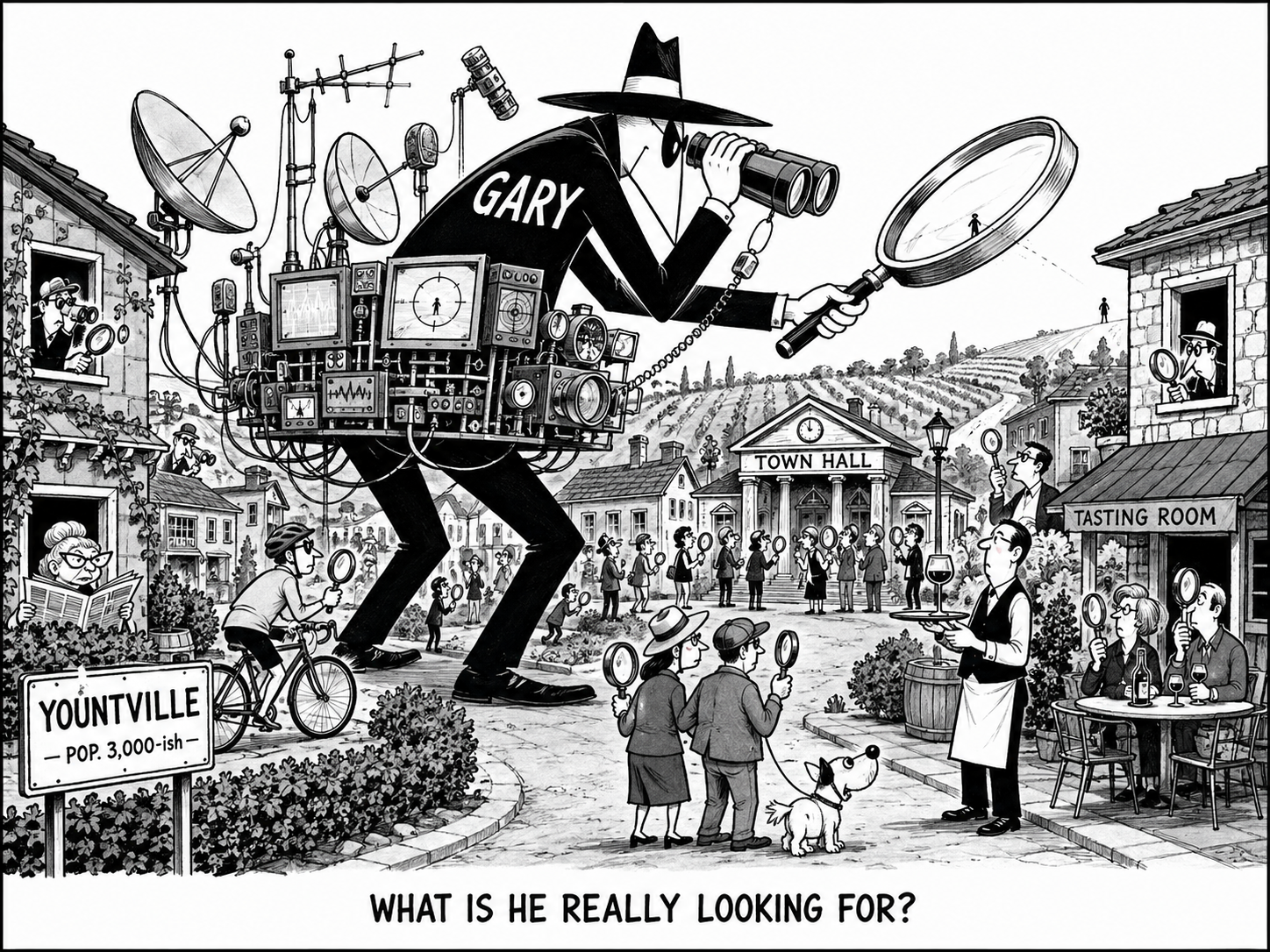
Gary Jabara is asking Yountville to “turn the page.” His own August 17 email explains how the campaign got here: a petition against the Commons became an invitation list, the list became parties, the parties became a “community,” and that community is now being urged to replace the town’s leadership. Fair enough. Political change is part of democracy. But before Yountville turns anything, its citizens might ask one old-fashioned question: what is actually written on the next page? This is an essay about the mildly inconvenient work of citizenship, and why a comfortable town cannot afford to let somebody else do its thinking for it.
Yountville is Not for Sale, #7, What the Whistleblower Actually Said
The public record also documents a pattern the Moon reported on August 7. At the August 4 council meeting, Councilmember Hillery Trippe demanded on camera that Town Attorney Gary Bell explain a severance payment she had participated in approving in closed session, a question the Brown Act forbade Bell from answering in public and one that Trippe, of everyone in the chamber, was best positioned to know he could not answer. She cast the lone council vote against the Commons and organized against the project outside the public process. None of that proves the complaint's central allegation, and this essay does not offer it as proof. It is context, on tape and in print, for why this complaint did not arrive in Yountville as a surprise.
Yountville is Not for Sale, #6: You Are Not Invited
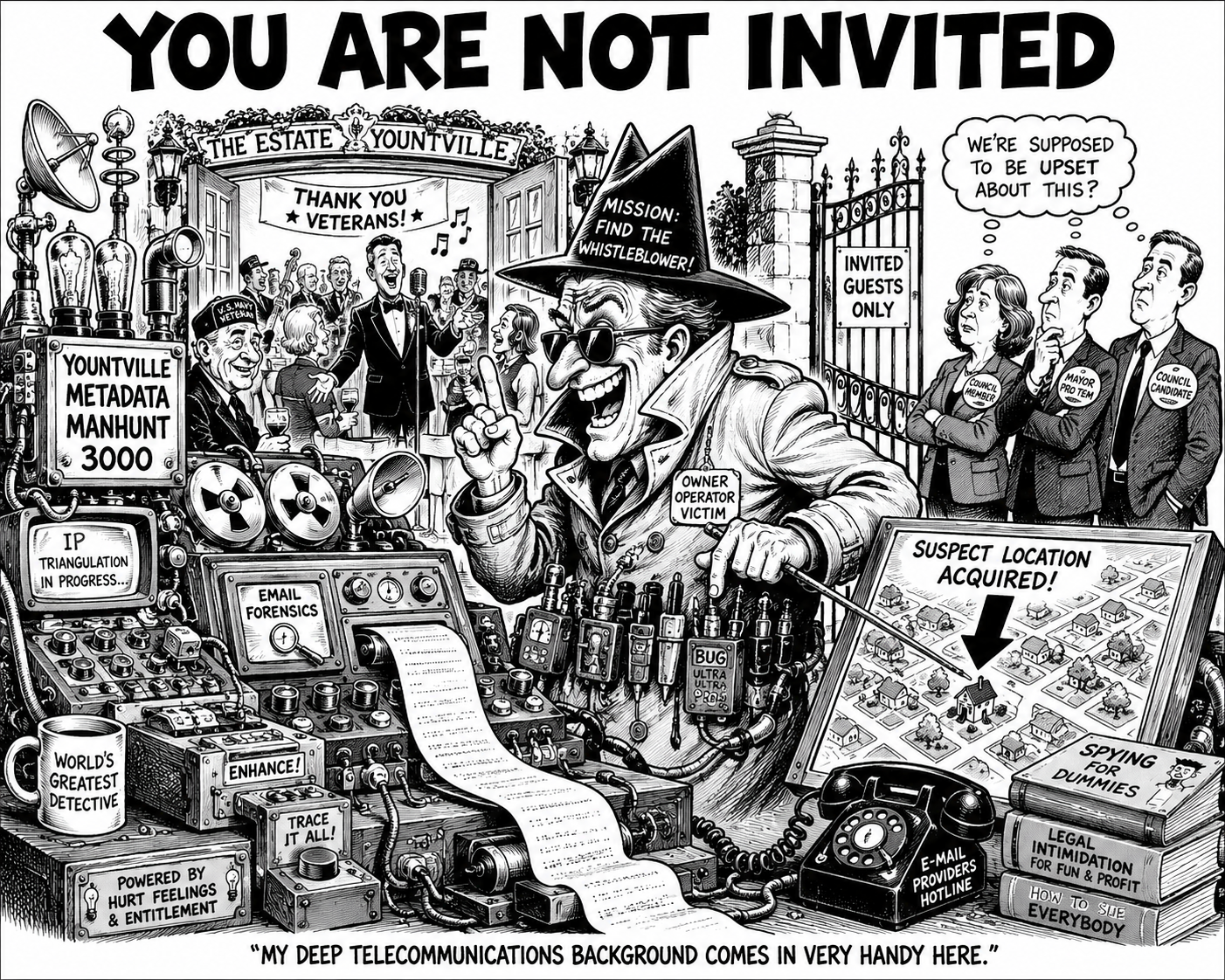
Gary Jabara says his Sinatra party is about friends, neighbors and veterans. But after one anonymous complaint, he informed Yountville’s entire political class that lawyers, metadata and his “deep telecommunications background” are on the case to find the sender’s exact residential address. Nothing says “I welcome a vigorous public debate” quite like hunting down the home address of someone who disagreed with you.
Congratulations, You Delayed It.
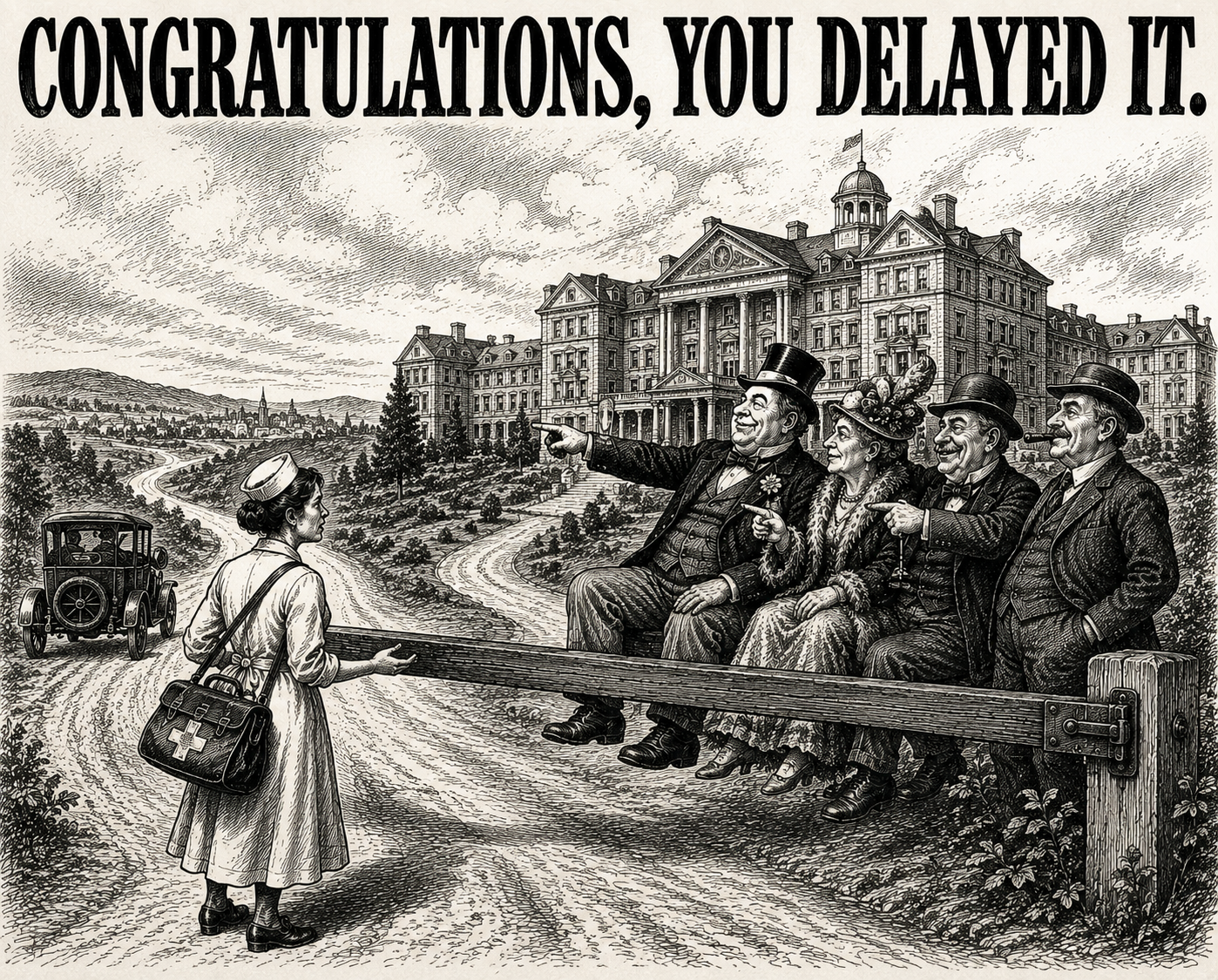
The essay argues that the repeal of the Commons zoning did not solve Yountville’s housing debate; it simply delayed the town’s most advanced effort to build permanently deed-restricted workforce housing on public land. The Veterans Home is used as the first and clearest test of what that delay means in practice. California is finishing a roughly $325 million skilled-nursing facility while CalVet itself acknowledges that the extraordinary cost of living around Yountville makes it difficult to recruit and retain caregivers. The petitioners did not create that staffing problem, but by interrupting a plan that could have begun with roughly 30 to 40 deed-restricted homes within walking distance, they made one part of the problem harder to address.
The larger point is that the burden of explanation now shifts. For two years, Town staff and Commons supporters had to answer questions about density, cost, parking, ownership, phasing and design. The people who delayed the project now need to say what they actually support. If 126 homes were too many, how many should be built? If the former school is the wrong site, where is the right one? If Measure S money, paid substantially by hotel visitors, should not help build workforce housing on Town-owned land, what should it do instead? The essay rejects another round of vague support for “workforce housing” without an address, a number of homes and a timeline.
The Veterans Home matters because it strips away the abstraction. Behind every delayed unit is an actual worker who still has to live somewhere: a nurse, nursing assistant, cook, hotel employee or other person whose work sustains Yountville but whose income increasingly excludes them from living there. The essay’s central challenge is therefore simple: Congratulations, you delayed it. Now tell Yountville what the delay was for, and what you are prepared to build instead.
Yountville is Not for Sale, #5, Six Candidates and the Fight Over What This Town Becomes
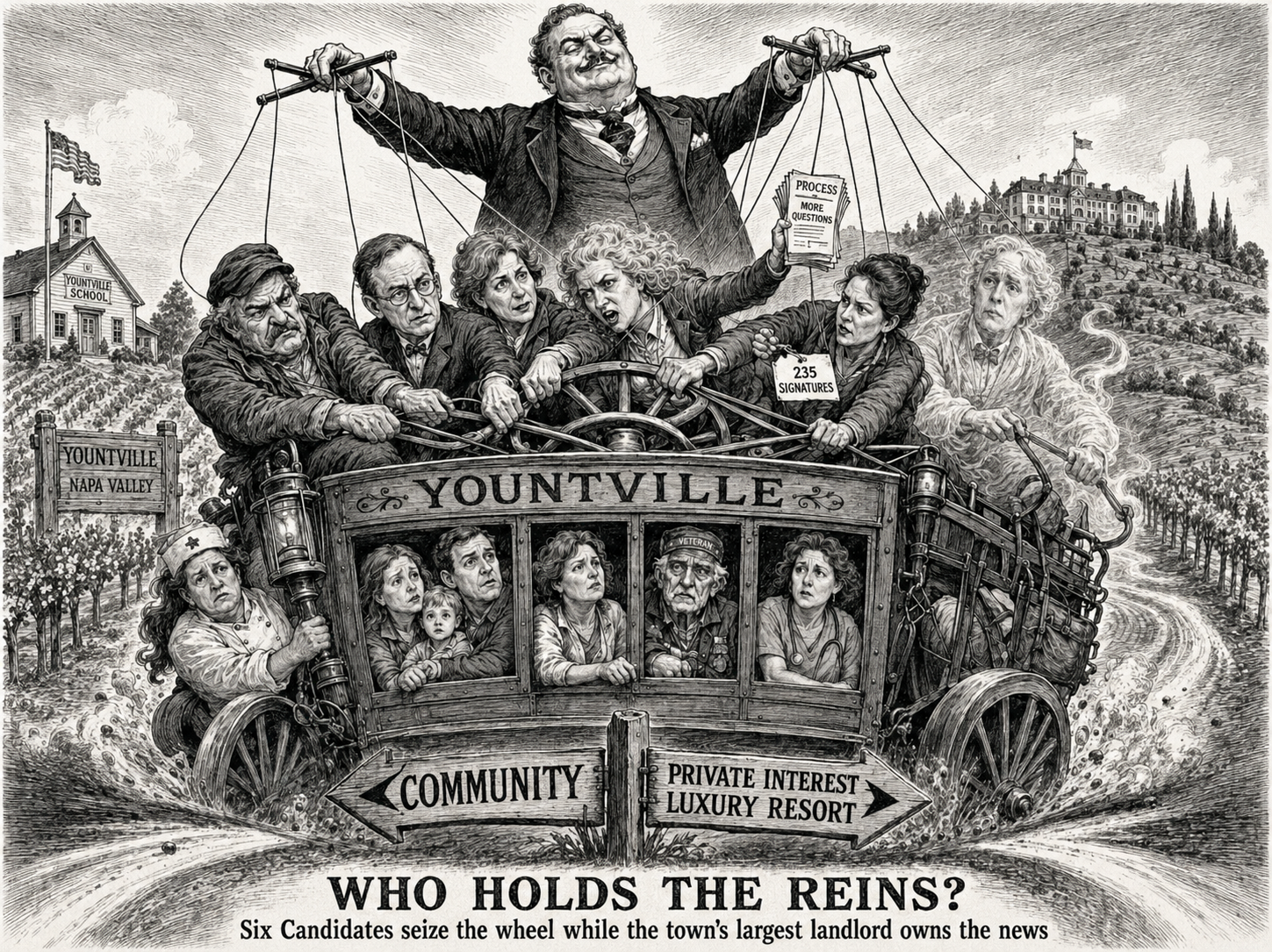
Taken far enough, Yountville becomes a cruise ship permanently moored among the vineyards: beautiful decks, superb restaurants, expensive cabins, immaculate landscaping, and an enormous crew that arrives every morning to make the experience possible before going home somewhere else at night. The passengers may love the ship deeply. They may spend generously while aboard. But nobody mistakes a cruise ship for a town.
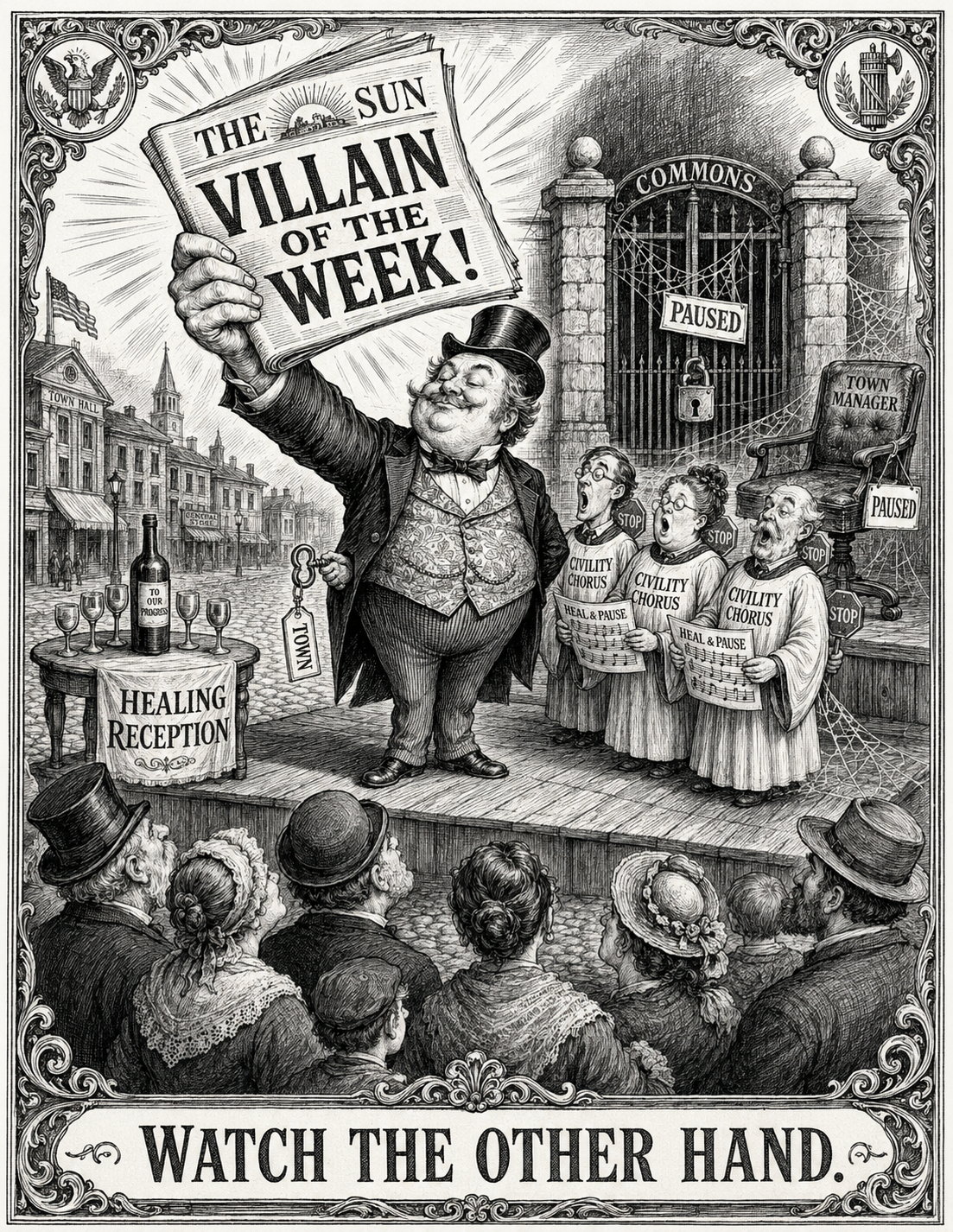
Yountville is Not for Sale, #4, Villain of the Week.
Since Gary Jabara bought the Yountville Sun this spring, the town's only newspaper has produced a new villain every week: the town manager, his severance, the council, the town attorney. None of the scandals survives thirty seconds of scrutiny. This essay explains the trick behind them, walks through the August 4 council meeting where it was performed in the open, and asks the one question none of the performers has ever answered: what have they proposed? Candidate filing closes this week. The election is November 3. What you do between now and then decides whether the trick works.
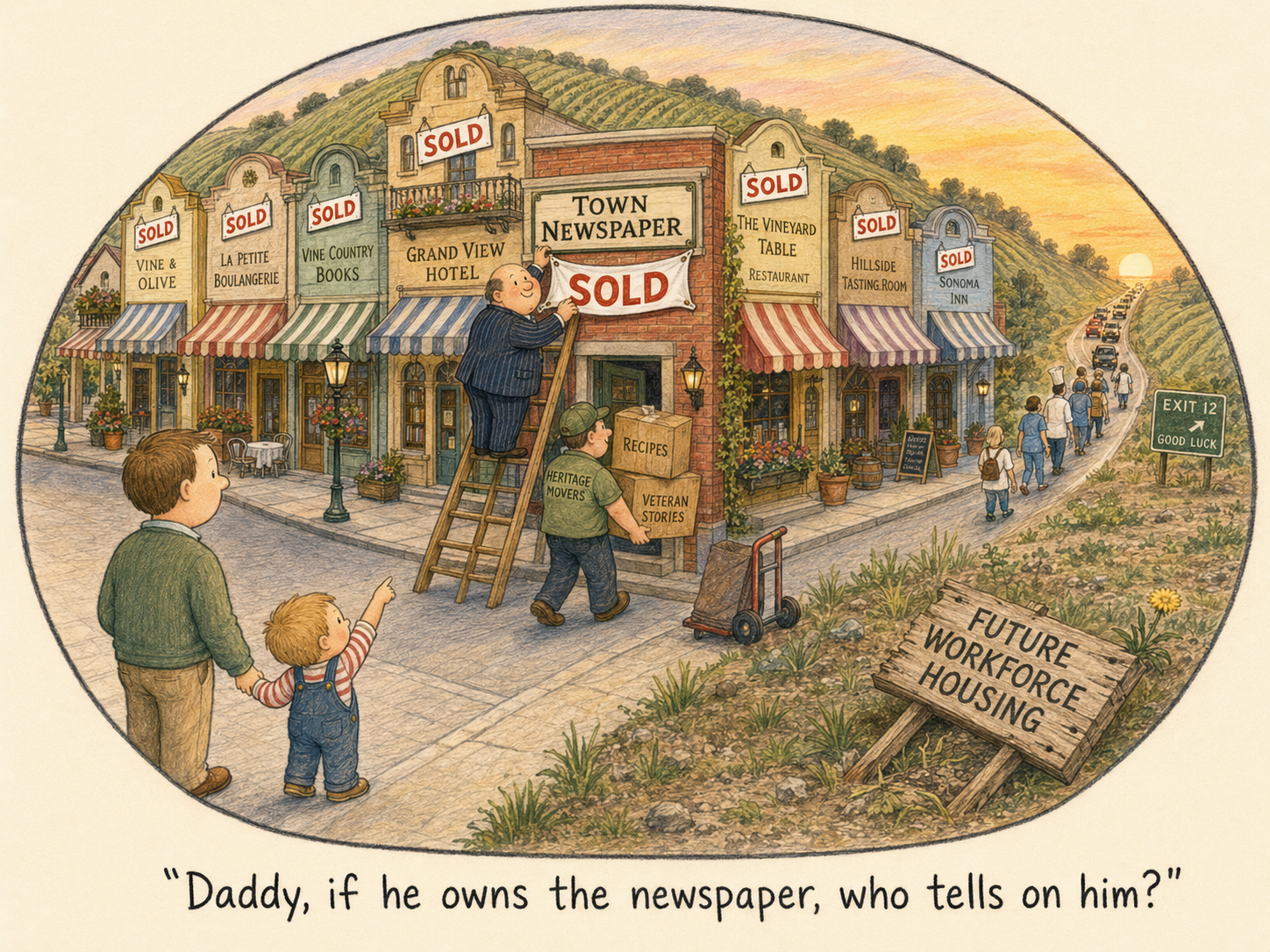
Yountville is Not for Sale, #3, Bezos Bought the Post. Ellison Bought CBS. Yountville Got Gary.
Billionaires buy newspapers now. Bezos bought the Post, Ellison bought CBS, and last week the genre arrived in Yountville, 103 days before an election for three of five council seats. Who owns the Sun, what he wants, and what he has never once proposed.
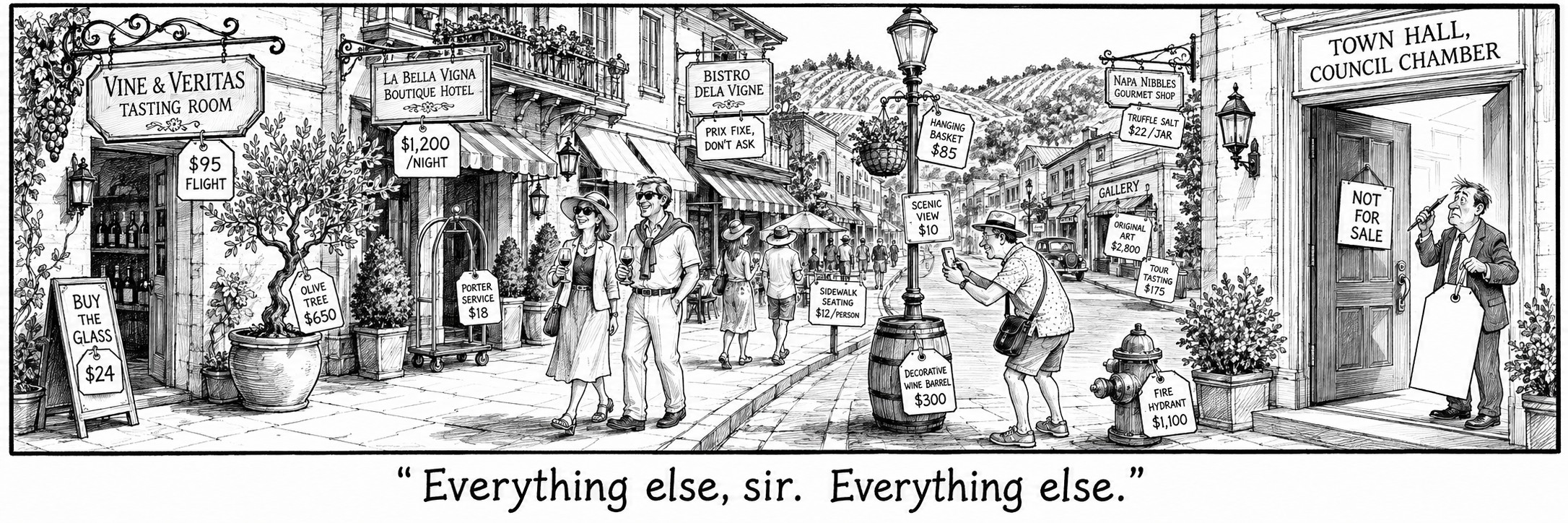
Yountville is Not for Sale, #2, What the Chamber Is For
At the July 21 Council meeting, Vice Mayor Pam Reeves stood up and described, on the record, how the campaign against the Commons zoning actually ran. Councilmember Hillery Trippe answered with a speech about the First Amendment. The town's newly resurrected newspaper reported the exchange as one council member criticizing another. This essay is about what political speech actually is and where it belongs. The chamber is the room where a town argues with itself in front of everyone, on the record, in the minutes. The argument moved somewhere else this spring. This essay is about getting it back where it belongs.
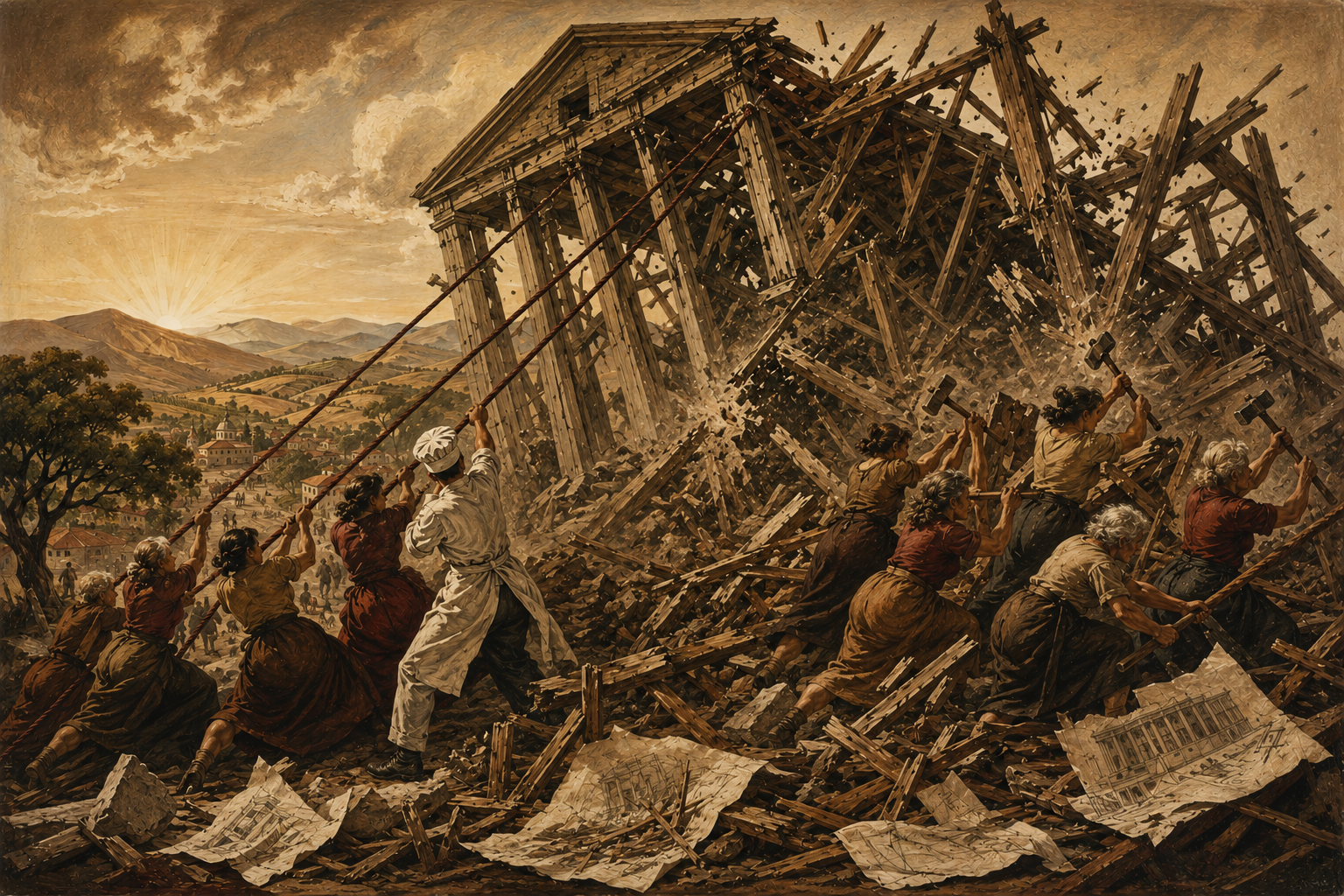
Yountville Is Not for Sale
In 2018, Yountville voters taxed hotel guests to fund workforce housing before the Town owned any land to build it on. When the elementary school closed, more than $3 million of that revenue helped buy the site for exactly that purpose. Eight years after the vote, 235 petition signatures stopped the Town from finishing what the public had already paid for. This essay opens a series examining how a small coalition converted delay into policy, why the Town's incremental building model threatened the politics of postponement, and what remains contested: whether assets the voters bought stay under public control.
Why Didn’t the Town Just Hire a Developer?
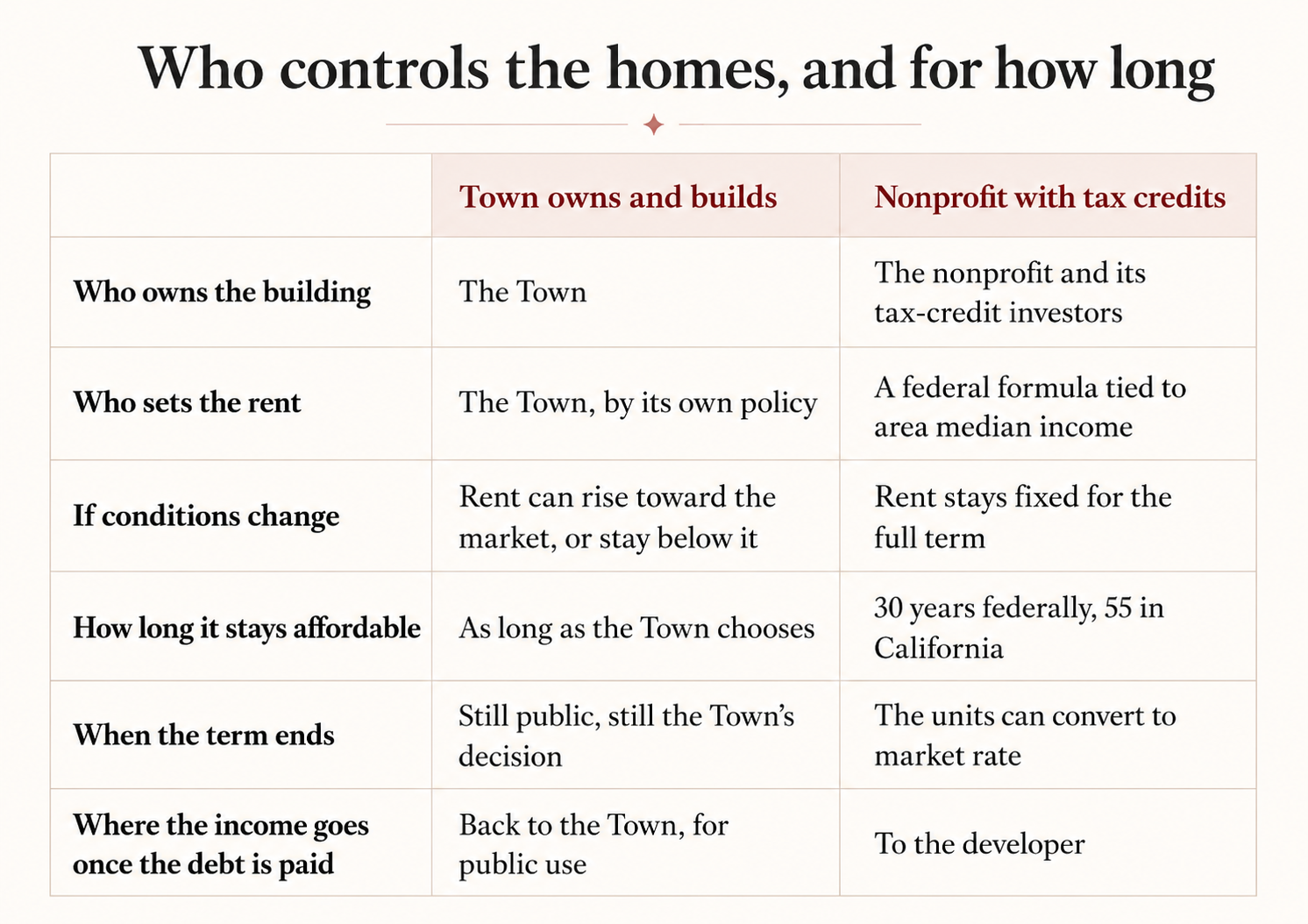
The contrast runs opposite to the one usually drawn. The model that sounds flexible, a tax-credit deal carried by a seasoned nonprofit, is the rigid one, its rents fixed and its affordability set to expire from the first day. The model that sounds risky, the Town owning what it builds, is the adaptable one, its affordability lasting as long as the Town wants and bending with circumstances rather than breaking against them.
The Shape of Belonging
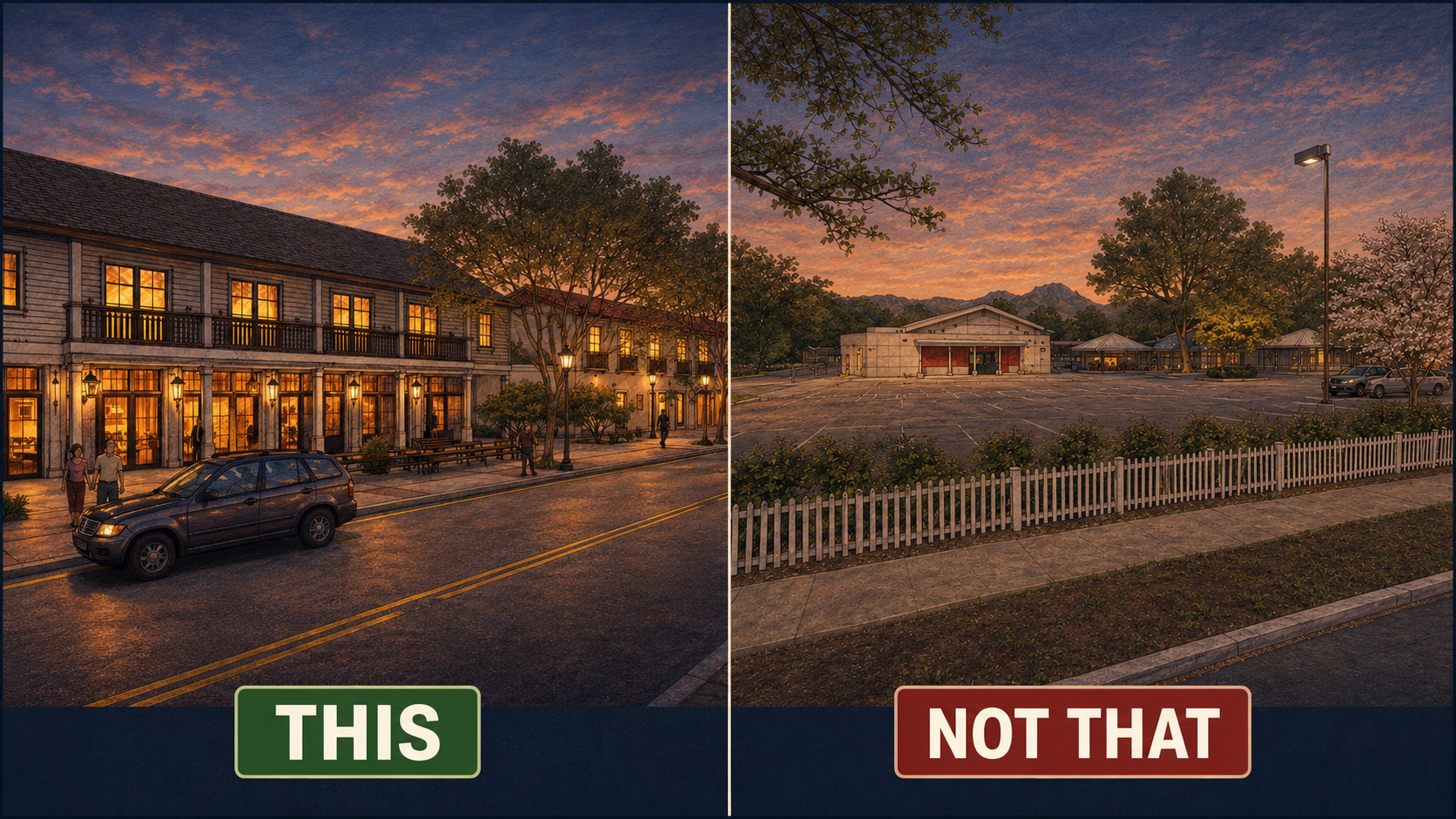
The Commons was not designed by asking how many housing units could be placed on the former school site. It was designed by asking what kind of public place the site could become. Housing mattered, but it was only one part of a larger civic framework: gardens, walks, fields, shaded parking groves, community rooms, recreation, and shared outdoor spaces arranged so daily life could overlap. The goal was not to isolate subsidized units from the rest of town, but to create a first rung into Yountville’s civic life; especially for younger adults and workers who are already part of the town every day, but rarely able to belong to it as residents.
The Price of Planning Ahead
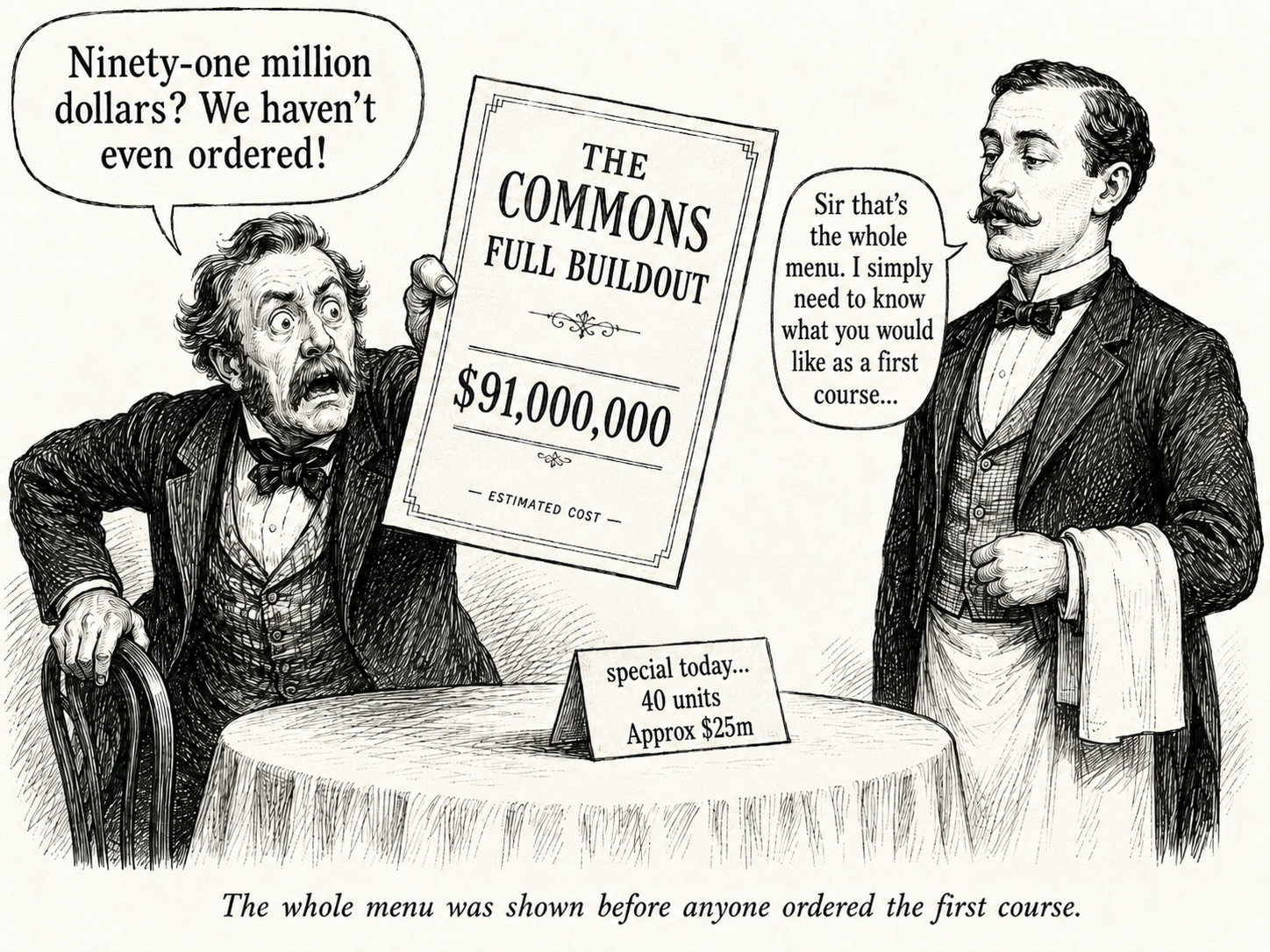
For many residents, the Commons debate came down to one number: roughly $91 million. That number sounded enormous because it was enormous. But it was not a construction contract, a check the Town was preparing to write, or a decision to build the entire Commons at once. It was an estimate of what the full seven-acre site might cost if, over many years and with future partners, the Town eventually built out the complete civic and housing framework it had studied.
The more immediate question was smaller and more practical: could Yountville build a first phase of about 40 homes, at roughly $25 million, while preserving the option to do more later? The Town was trying to understand the whole menu before deciding what it could afford to order first. The repeal mistook that menu for the bill, and in doing so, narrowed the clearest path forward.
It Was Never Just a Housing Project
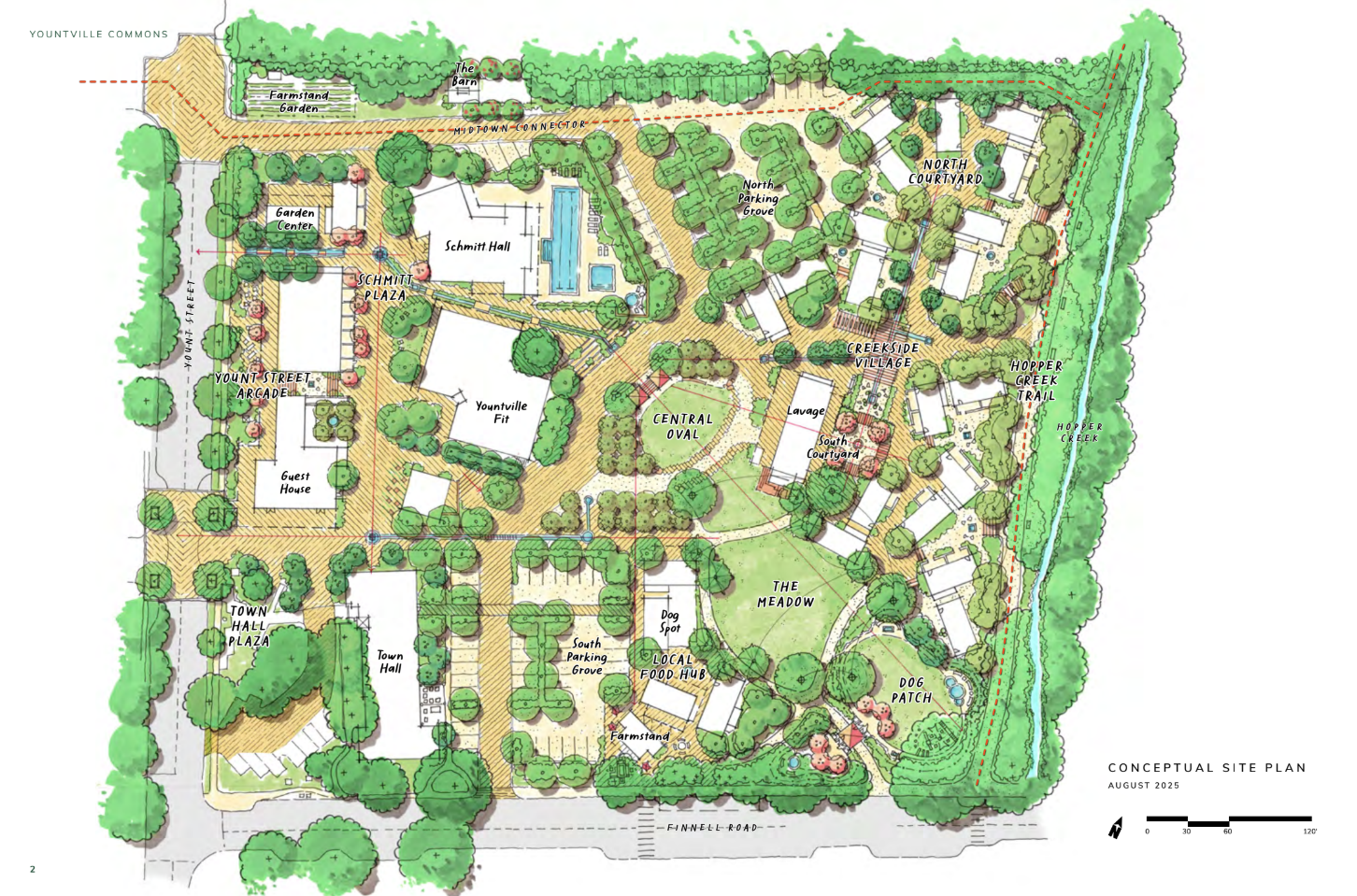
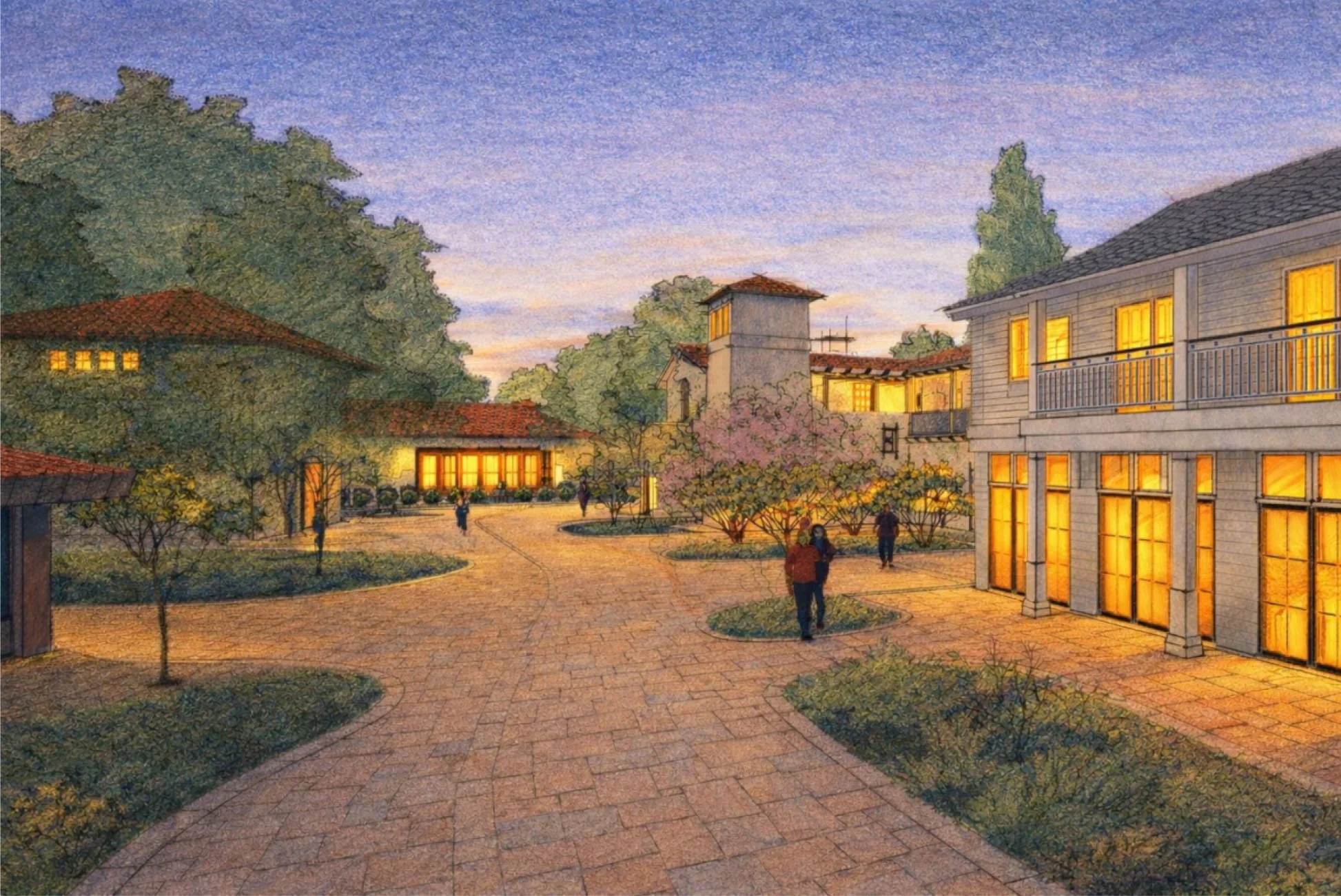
The first mistake in understanding Yountville Commons is to begin with the housing. The old school site was not purchased to become a project. It was purchased to become public again. Before the debate narrowed to unit counts, price tags, and zoning fights, the fences came down. The former library became Yountville Fit. The cafeteria became Schmitt Hall. A disused field became the town’s first dog park. The snack shack became a farmstand café. The garden came back to life.
Those were not side benefits. They were the beginning of the idea. Yountville Commons was never merely a housing proposal. It was a civic reclamation project: an attempt to return a closed school campus to common life, while also making room for some of the people who keep Yountville running.
The Question I Cannot Stop Asking
The town slowly filled with second homes and wealthy visitors who now, in turn, pay the taxes that fund the majority of costs to keep Yountville charming, peaceful, and, on the surface, unchanged. Who would ever make that trade, the comforts for what a preserved town looks like in exchange to keep the vast majority of the labor who keep the town functioning many miles away?
The Town That Misplaced Its Children
Yountville did not lose its children all at once.
It lost them slowly, through decisions that seemed reasonable at the time. Protect the vineyards. Limit growth. Preserve the small-town character. Build the visitor economy. Let the market handle the rest.
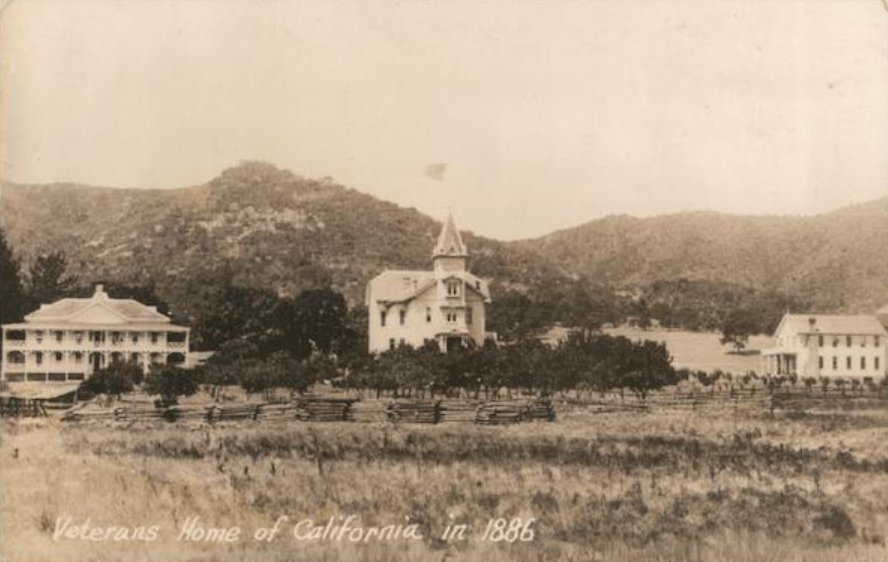
For a while, the bargain looked like success. The town became beautiful, prosperous, and protected. But the families who once filled the school became harder to find. The workers who kept the town running drove in from somewhere else. The old elementary school, open for more than 125 years, closed in 2020.
That closure was not just a school district story. It was a civic warning light.
Chapter Zero begins there, before the arguments over units, parking, density, and process. It asks the question beneath all the others: what does it mean for a town to preserve itself so carefully that it no longer makes room for the next generation?
Where the Workers Were Counted
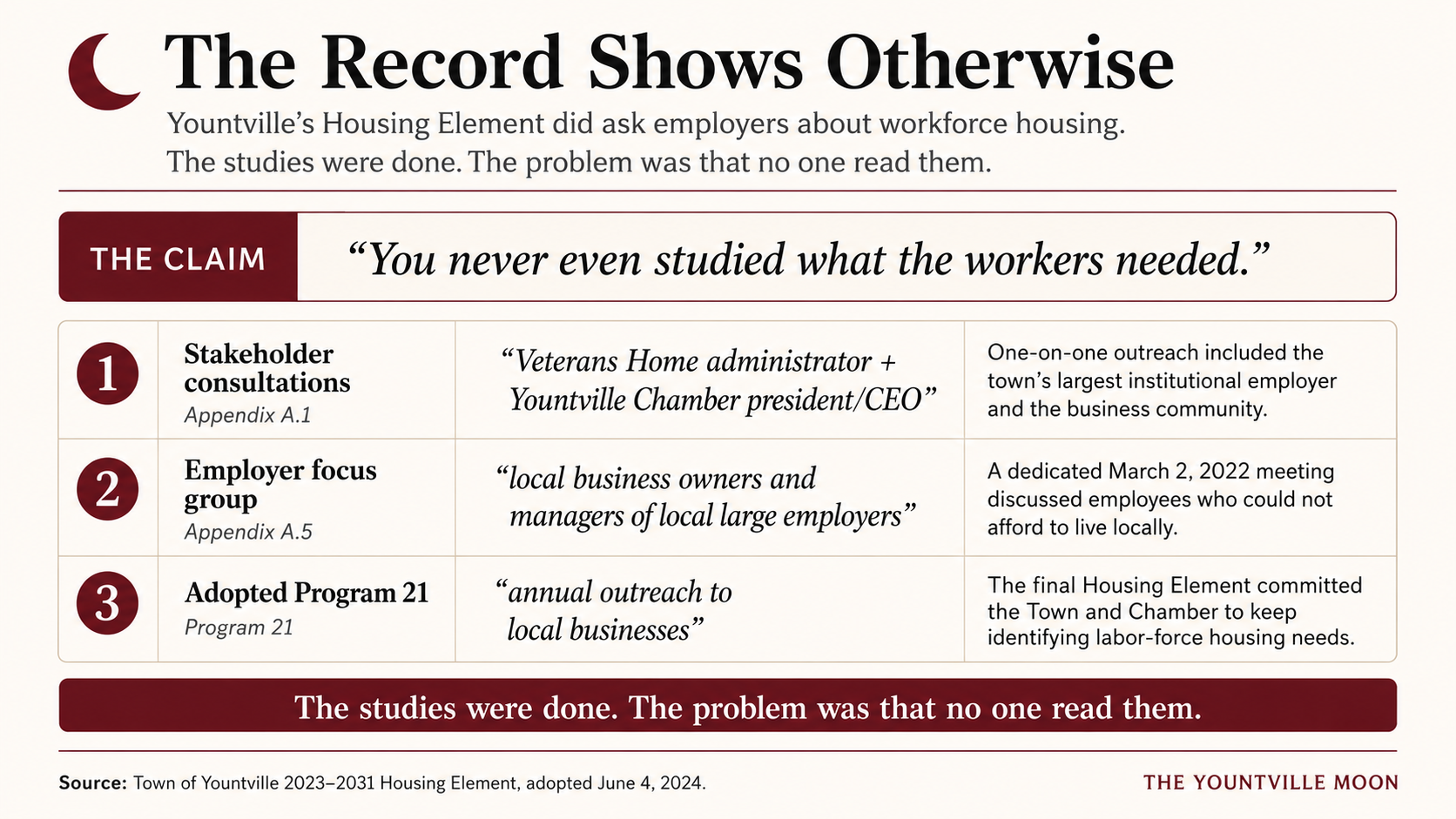
A claim has been moving around town: that no one ever studied what Yountville’s workers actually needed.
It is a useful claim because it sounds simple. It gives people permission to dismiss the whole housing conversation as rushed, vague, or invented.
But the claim falls apart the moment you open the public record.
The workers were counted in the Housing Element. Their commute patterns were counted. Their wages were measured against local rents. Large employers were consulted. Business owners and managers sat in a focus group. The Chamber was named as a partner for continued outreach. The documents do not hide this. They say it plainly.
The problem was not that the studies were never done.
The problem was that too many people formed opinions without reading them.
This essay is a guide to the record: where the workers were counted, what the Town was told, and why the evidence still matters now.
The Fragile State of Yountville’s Workforce Housing
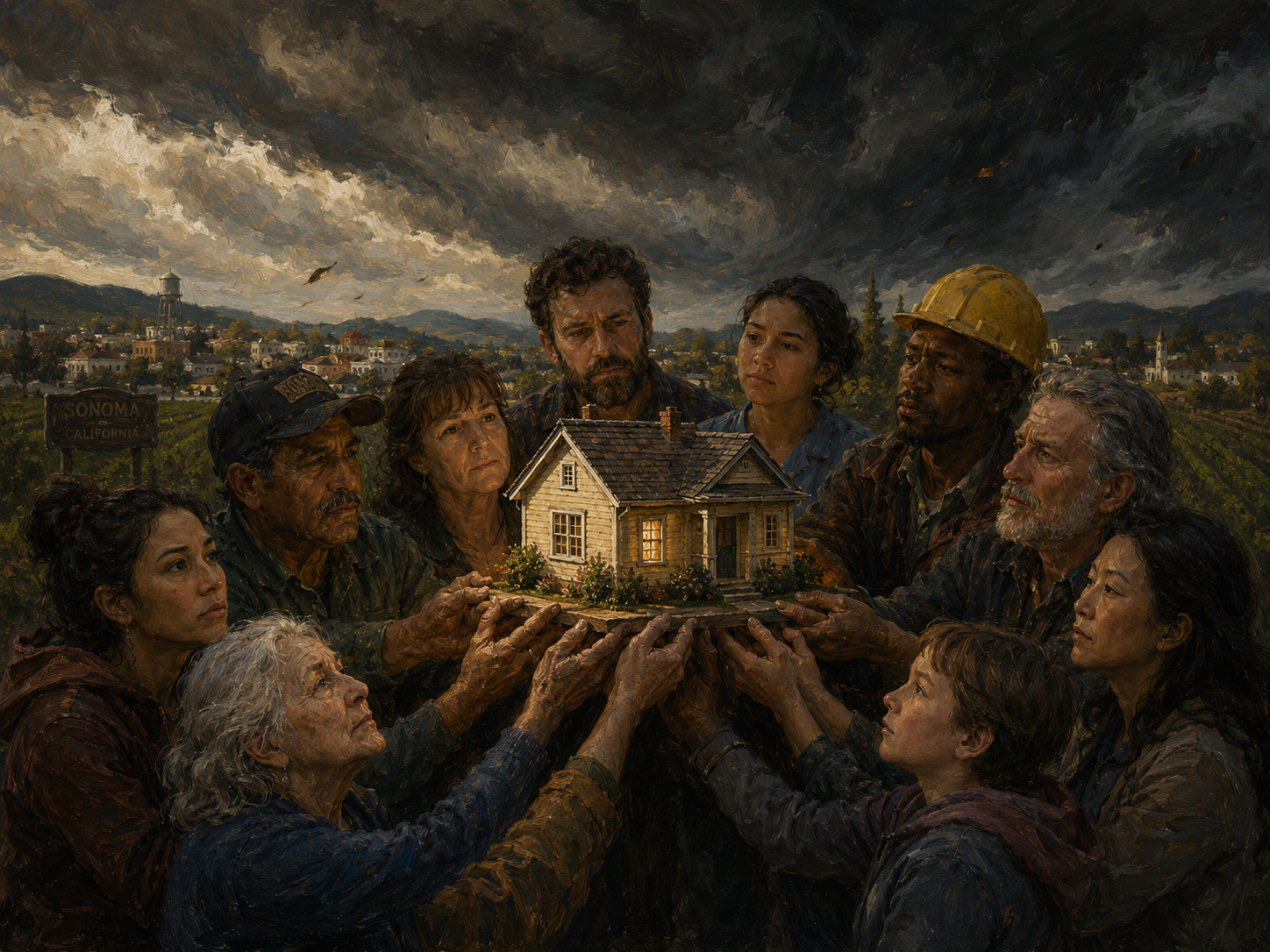
Eighty-two percent of the people who work in Yountville do not live in Yountville. The Town’s own Housing Element documents the figure. It has not improved in any recent decade.
That single number is the starting point for the essay because it exposes the basic contradiction at the heart of Yountville’s economy. The town depends every day on workers who clean hotel rooms, cook meals, care for seniors, pour wine, maintain streets, staff shops, tend gardens, and keep civic life functioning. But the vast majority of those workers cannot afford to live in the place their labor sustains.
The article follows that contradiction through the actual housing math. It compares wages, rents, utilities, income bands, unit sizes, and Yountville’s existing deed-restricted housing inventory. What emerges is not a vague affordability problem, but a precise structural failure: the town has some affordable housing, but too little of it, too much of it aimed at the wrong income tiers, and almost none of the small studio housing that would match the needs of the entry-level workforce.
The essay argues that this condition did not happen by accident. It is the cumulative result of decades of defensible choices: preserving town character, limiting growth, protecting scarcity, and relying on private development agreements to produce workforce housing at the margins. Those choices helped make Yountville beautiful and valuable. They also helped produce a town where the people who keep the place running mostly have to live somewhere else.
At its core, the piece asks readers to look past impressions and confront the math. Before Yountville can debate any proposed solution honestly, it has to acknowledge the problem clearly: workforce housing is not a favor to outsiders. It is part of the civic infrastructure of the town itself.