
When Government Makes One Generation of Homeowners Rich, It’s Capitalism. When It Helps the Next Generation Afford Housing, It’s Socialism.
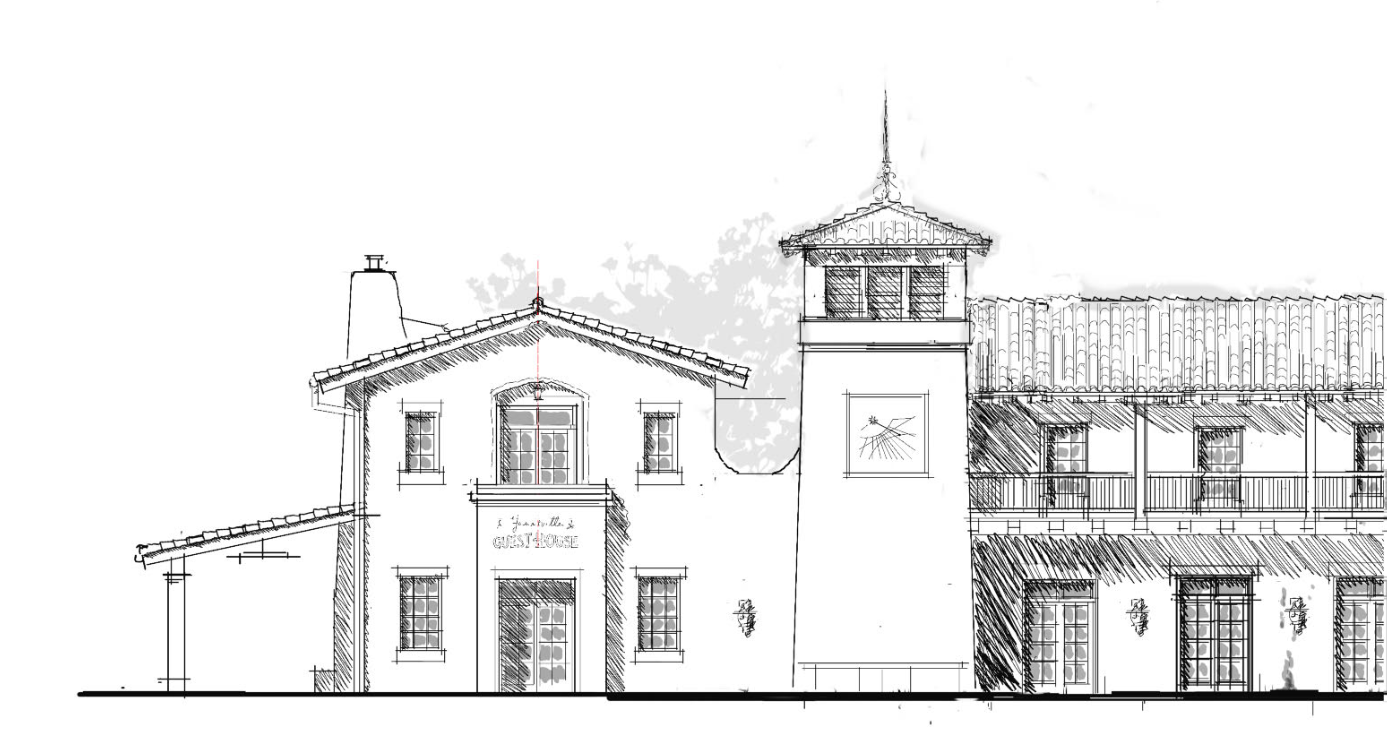
An early architectural study for the Yountville Commons imagined something California once knew how to build: a beautiful, walkable community where working families could afford to live. The familiar rooflines, shaded balconies, and modest scale were deliberate, intended to make new housing feel as though it had always belonged in Yountville. The larger ambition was equally simple: preserving the character of a town should mean making room for some of the people who give it life, not merely protecting the property values of those fortunate enough to have arrived first.
Our housing crisis is not an accident of the free market. It was the entirely predictable result of fifty years of government decisions. Why the generation that benefited from those decisions now has an obligation to help undo them, and what a small town called Yountville tried to do about it. Apparently asking government to now make room for others is considered radical?
Congratulations on Your Excellent Investment Strategy
Suppose you bought a California house in 1985, when a middle-class salary could purchase one without a venture capitalist or deceased aunt. You made mortgage payments and replaced water heaters. You endured a kitchen renovation during which a contractor explained, with the solemnity of a transplant surgeon, why moving the sink three feet required another $18,000. Forty years later the house had made you wealthy. Your financial genius consisted largely of remaining alive and remembering to pay the property taxes.
This is wonderful news for the homeowner, who has little reason to investigate the miracle. His thirty-year-old daughter is less thrilled. Her degree and decent job qualify her for a bedroom in somebody else's house, possibly with a shared bathroom and a roommate who regards loading the dishwasher as an oppressive social convention. In 2026, a household needed $226,800 in annual income to afford Napa County's median-priced home, according to the California Association of Realtors. Only 23 percent of county households qualified, making ownership less the American dream than an exclusive postgraduate program with a spectacular application fee.
How to Preserve the Landscape While Misplacing the Residents
California's Legislative Analyst's Office explained the mechanism in 2015, apparently imagining that clear explanations would cause somebody to act. The state built too few homes where people wanted to live, and shortages drove prices upward. Geography, jobs, and construction costs mattered, but government restrictions prevented supply from responding normally. When avocados become expensive, somebody plants more trees; when California houses become expensive, we commission an inquiry into whether another house would impair the character of the avocado orchard.
Zoning achieved this without requiring anyone to announce that newcomers were unwelcome. Huge areas were reserved for detached houses, while duplexes, courtyard apartments, and modest buildings where people once began adult life became suspicious activities requiring public hearings. In Napa Valley, this acquired the additional moral authority of the Agricultural Preserve, established in 1968 to protect the valley from becoming another subdivision-infested suburb, an extraordinary and genuinely admirable accomplishment whose success should not be confused with an exemption from consequences. The Preserve protected agriculture while concentrating much of the responsibility for accommodating residents within a handful of towns that were themselves reluctant to build anything denser than somebody's fondest childhood memories. Meanwhile, the valley underwent its gradual resortification, transforming from a working agricultural community into an international luxury destination requiring an ever-expanding population of cooks, housekeepers, vineyard workers, servers, and maintenance crews, while offering these same people approximately the residential opportunities available aboard a private yacht.
We perfected the art of accommodating visitors who could spend $1,000 on a romantic weekend while making it progressively more difficult to accommodate the cook preparing their dinner, the housekeeper changing their sheets, or the agricultural worker responsible for the wine over which they were becoming romantically intoxicated. Second homes multiplied, ordinary houses became investment vehicles, and the valley's celebrated rural character grew increasingly dependent upon workers commuting from communities where living was still considered an acceptable land use. There was nothing inherently wrong with protecting agriculture, welcoming visitors, or making excellent wine. The perversity emerged from combining these perfectly defensible objectives with land-use policies that refused to provide sufficient housing inside the communities where development was supposed to occur. We managed to protect the vineyards, enrich property owners, welcome tourists, and export families, an arrangement so elegantly self-serving that it could only have been accomplished by people sincerely convinced they were protecting the community.
Katherine Levine Einstein, David Glick, and Maxwell Palmer documented the underlying civic machinery in their book Neighborhood Defenders. Participants in local housing decisions were disproportionately older, established homeowners, and more opposed to new construction than the general population. A working parent commuting from Fairfield has limited enthusiasm for attending a Tuesday afternoon hearing about the shadow of an apartment she cannot afford to occupy. The people already comfortably seated at the table decide how many additional chairs the restaurant may purchase, then congratulate themselves on the democratic elegance of the seating plan. Meanwhile, existing homeowners watch their properties appreciate magnificently, having discovered the extraordinary financial benefits of preserving nearly everything about Napa Valley except the possibility that their children might someday afford to live there.
The Good-Intentions Surcharge
California insists that new buildings be safer, more energy-efficient, more accessible, and better prepared for earthquakes and fires. These are legitimate interests, and advocates for collapsing staircases should probably avoid careers in building inspection. Standards cost money, however, and their cumulative expense falls heavily on new construction. Someone purchasing an older California house inherits a building constructed under yesterday's requirements, while the person buying tomorrow's house pays to satisfy today's considerably more ambitious ones. The state raises the price of admission, then expresses sincere concern that young people cannot afford tickets.
Development impact fees introduce an especially Californian circularity. New housing pays for roads, utilities, parks, and civic facilities, which sounds reasonable until the charges help make the housing unaffordable. A 2026 UC Berkeley Terner Center study found nearly $20,000 per affordable unit in impact fees on average and estimated that waiving them could support roughly 1,250 additional affordable homes annually. We have perfected the technique of charging affordable housing an unaffordability surcharge, then seeking a subsidy to cover it. The resulting administrative process is sufficiently complicated to require professionals whose salaries become another expense, which is rather like hiring a personal trainer to carry the groceries you purchased because you cannot afford a gym membership.
Affordable Housing and the Disappearing Middle Class
Here the situation becomes especially cruel, because California has developed a remarkably sophisticated vocabulary for identifying people who cannot afford housing while demonstrating substantially less ingenuity in providing it. Much publicly subsidized rental housing is financed through the federal Low-Income Housing Tax Credit program, where 60 percent of Area Median Income, or AMI, is a central benchmark. The rules also permit other income thresholds, including income-averaging arrangements, and different housing programs serve households at 80 or even 120 percent of AMI. But the familiar 60-percent standard illustrates the problem beautifully. In Napa County in 2026, the tax-credit income limit at that level was $105,780 for a family of four.
Now imagine a young couple with two children earning $155,000 between them. They are college-educated, steadily employed, paying taxes, and possibly contributing to retirement accounts with the touching optimism of people who have not calculated the cost of keeping two children in shoes. They earn too much to qualify for a conventional apartment restricted to households at 60 percent of AMI, and their income also exceeds Napa's separate 80-percent low-income limit of $140,950 for a four-person household. Yet they earn nearly $72,000 less than the income needed to purchase Napa County's median-priced house. They have achieved the increasingly peculiar distinction of being financially successful enough to be disqualified from much subsidized housing while remaining financially unsuccessful enough to be disqualified from ordinary homeownership.
There are moderate-income programs and exceptions, but eligibility for assistance does not mean an appropriate home actually exists. California has effectively created a class of households that the housing bureaucracy regards as too prosperous to need help and the real estate market regards as too impoverished to be taken seriously. These are teachers married to firefighters, nurses married to technicians, restaurant managers married to municipal employees, and other combinations of respectable occupations that once supplied the population of ordinary American neighborhoods. They have jobs, children, health insurance, and occasionally a dog. What they lack is a sufficiently ancient purchase date, which has become the distinguishing qualification for middle-class security in California.
The Three-Bedroom Ranch House and the Weekend Economist
Consider the ordinary three-bedroom, two-bathroom ranch house down the street, the kind built when California still considered the housing of families a normal civic activity. It has a two-car garage, a lawn, perhaps an elderly citrus tree, and bedrooms sufficiently unremarkable that generations of children managed to grow up in them without architectural trauma. Its longtime owner eventually sells. A flipper purchases it, replaces the kitchen with something involving quartz countertops and imported fixtures, paints everything a shade of white previously available only in expensive dental offices, and returns it to the market at a handsome premium. The house is now described as a curated Wine Country retreat, a phrase that rather efficiently removes any suggestion that someone might actually need to live there.
The prospective buyers include our young family, who imagine bicycles in the driveway, homework at the kitchen table, and children attending the local school. Their competition is a financially comfortable couple from elsewhere who would enjoy spending occasional weekends in Napa Valley. The second-home buyers have access to substantial accumulated wealth, perhaps including equity from another property that benefited from precisely the same scarcity. They can pay considerably more, and because they do not need the house to support the daily economics of raising children, the price can be evaluated partly as a lifestyle purchase and long-term investment. The property appreciates whether anyone is sleeping in it on Tuesday night, a feature considerably less common among automobiles and recreational vehicles.
It would be gratifying to identify a villain here, but the flipper and the second-home buyers are behaving with impeccable economic rationality. Nobody needs to be malicious when the incentives are this thoughtfully arranged. A property in a beautiful, supply-constrained valley is an attractive investment precisely because additional comparable properties are difficult to create. The investor understands what homeowners sometimes prefer not to acknowledge: scarcity produces value, and scarcity protected by government policy offers an especially reassuring prospect of continued appreciation. One might almost admire the efficiency with which public land-use restrictions have been converted into private wealth, were it not for the small detail that the children are now sleeping in Fairfield.
Yountville's own housing research gives the situation an appropriately surreal statistical dimension. More than two-thirds of the town's estimated vacant housing units are held for seasonal, recreational, or occasional use, rather than being offered to people seeking somewhere to live. These homes are not necessarily abandoned or neglected. Many are beautifully maintained, contribute property taxes, support local businesses, and provide their owners with immense pleasure. But their availability to the town's permanent population is roughly equivalent to the availability of a reserved hotel suite. We have arrived at a housing market where an empty house can be financially productive, aesthetically impeccable, and entirely useless to the family that would most like to occupy it.
The Affordable Housing Hunger Games
Organizations such as Burbank Housing, which develops affordable communities throughout Napa and the North Bay, are attempting to navigate this arrangement with commendable persistence. Their financing mechanisms would make an investment banker request a quiet room. Federal tax credits are allocated through competitive state-administered programs and generally exchanged for investment capital, while developers assemble additional loans, grants, local assistance, and other funding. The highly competitive 9-percent credits are particularly valuable, while 4-percent credits operate through different financing arrangements. In 2025, California's tax-credit allocation agency reported 526 applications and 253 project awards across its programs, meaning that even meticulously prepared projects cannot assume the money will materialize.
Burbank Housing's Heritage House and Valle Verde developments produced 90 affordable Napa homes, supported partly by nearly $15 million from several state-administered housing grants. These are genuine accomplishments for the households receiving them. They also demonstrate how extraordinary the financing gymnastics have become. We made ordinary housing so expensive that an entire profession now specializes in making small portions of it affordable again, provided the developer successfully navigates a funding competition whose rules bear approximately the same relationship to ordinary construction finance that competitive figure skating bears to walking across a frozen pond.
Howard Husock's America's Trillion-Dollar Housing Mistake questions the unintended consequences of elaborate public housing interventions, while Ezra Klein and Derek Thompson's Abundance examines institutions that proclaim admirable objectives while obstructing their accomplishment. One need not agree with every conclusion of either book to recognize the architecture of the absurdity. Government restricts the production of housing, adds to its cost, offers subsidies to compensate, and then distributes those subsidies competitively because the demand exceeds available funds. The family earning $155,000 watches this elaborate production from the sidelines, having been informed that its income is simultaneously too high and too low. There is probably a government form somewhere on which this condition has been given a reassuring acronym.

A vision of the Yountville Commons transformed into a lively Christmas market, with workforce housing overlooking a public plaza shared by Town Hall, the local health club, Schmitt Hall, and other civic amenities. Making room for more people should mean more than constructing apartment blocks surrounded by parking lots. It should mean creating beautiful, walkable neighborhoods where housing, shops, public spaces, and community life belong together. The Commons envisioned exactly that: a place where young families and working residents could not only afford to live in Yountville, but participate fully in the life of the town. The goal was never simply to build more housing. It was to make room for a community who was making room for others.
Socialism, Except for the Profitable Parts
Someone inevitably declares that government-owned workforce housing is socialism, often from a house enriched by decades of government restrictions on competing construction. This person welcomes zoning boards regulating neighbors, building departments dictating specifications, and municipalities imposing development fees. These interventions are treated as the natural workings of free enterprise. The ideological emergency begins when government proposes using public land to accommodate people who actually work in the community. Apparently government intervention is capitalism when it increases the value of an existing house, and socialism when it creates the possibility of another.
There are serious questions about public ownership, construction risk, operating expenses, and whether a municipality should build directly or partner with private developers. Public control does not suspend arithmetic, however desperately a town manager might desire that power. Municipal workforce housing can serve people who fall outside conventional federal subsidy programs while remaining entirely compatible with private development and private ownership. The justification is unusually straightforward: government helped create the scarcity and therefore bears some responsibility for addressing its consequences. A town retaining land and developing housing for its workforce is exercising considerably less ideological imagination than the government agencies that spent decades determining how few homes everyone else was permitted to build.
The Small Town That Noticed the Missing Children
Yountville offered an exquisitely local illustration. Its former elementary school occupied valuable land near the center of town, a reminder that a community celebrated for hospitality had become increasingly inhospitable to families. Restaurants and hotels needed employees, municipal services required workers, and the local economy depended upon thousands of people whose salaries purchased considerably more housing somewhere else. Meanwhile, the physical evidence of an earlier generation of children sat conveniently across from Town Hall. It was as though Yountville had preserved the museum exhibit while quietly exporting the species.
The Yountville Commons envisioned publicly owned land accommodating workforce homes, civic facilities, local businesses, gathering places, and open space. Environmental planning contemplated as many as 150 homes, with phased construction to manage cost and financing. Retaining the land offered long-term community control while potentially serving households who earned too much for traditional low-income programs and far too little to purchase the newly curated ranch house down the street. Nobody pretended construction was free or municipal development magically immune from California's expenses. But the proposal involved an asset already controlled by the public, an identifiable workforce needing housing, and a practical opportunity to connect the two, a fairly revolutionary arrangement in a state where housing policy frequently consists of explaining why those two things must remain separated.
The Commons could never solve California's housing crisis, but it addressed the central absurdity at a comprehensible scale. A town that had benefited from fifty years of rising property values could use a small portion of its collective resources to make permanent residence possible for people who had missed the original opportunity. It would not threaten the vineyards, abolish private property, eliminate second homes, or compel anyone to surrender the profits of an exceptionally well-timed real estate purchase. It would simply recognize that a successful community requires actual residents, including young families, rather than an increasingly exquisite collection of appreciating assets occasionally occupied by people who live elsewhere.
Homeowners should enjoy their good fortune, including the appreciation that has given so many California families financial security. But some portion of that fortune reflects scarcity protected by public decisions, and the bill has arrived on the kitchen tables of their children. We have created a society in which parents can describe buying their first home on a single middle-class income while their professionally employed children calculate whether two salaries will cover the rent, much less a mortgage. The parents quite reasonably regard their houses as the foundation of retirement security, while the children discover that the same appreciated value has become the principal obstacle to establishing families of their own. Everyone is behaving rationally inside a system whose collective result would be regarded as deranged if someone proposed designing it from scratch.
Yountville has become very good at preserving things, from agricultural landscapes and historic buildings to the charming streetscapes that make visitors fall in love with the town. Preservation is a noble undertaking, although a town eventually confronts the awkward distinction between preserving a community and preserving its scenery. Scenery does not volunteer, attend school, serve on commissions, raise children, or repair the plumbing at eleven o'clock on a Sunday night. The Commons represented an attempt to make room for the people who perform those less picturesque functions, including the next generation of families who might otherwise appear in Yountville only as photographs on the refrigerators of their parents' increasingly valuable homes. One imagines those refrigerators will eventually be replaced with magnificent stainless-steel models, perhaps during another $80,000 kitchen renovation, by contractors who will be commuting from somewhere affordable.
